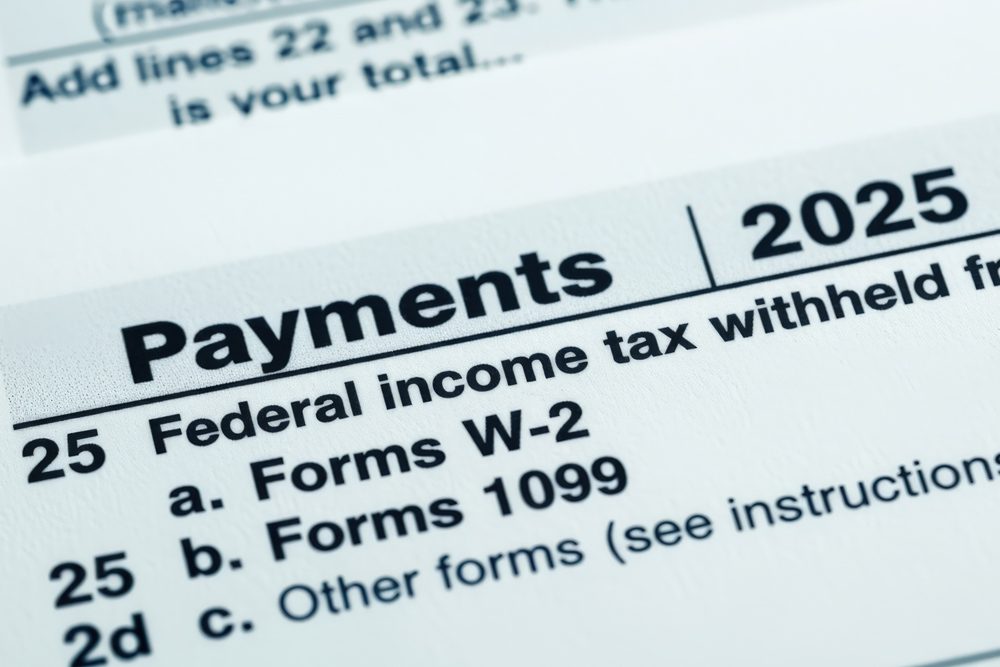

The federal reporting threshold for Form 1099-NEC (Nonemployee Compensation) has officially increased from $600 to $2,000 for the 2026 tax year. Enacted under the One Big Beautiful Bill Act (OBBBA), this changes a static limit that remained unchanged since 1954. Businesses must now issue and file Form 1099-NEC only for independent contractors, freelancers, or unincorporated vendors who receive $2,000 or more for services during the 2026 calendar year.
This comprehensive guide details the operational, state-level, and compliance shifts driven by the new rule.
Understand the New Legislative Framework
The OBBBA explicitly targets the administrative and paperwork burdens balancing on small businesses and independent professionals. The regulatory updates introduce several foundational shifts:
- Form 1099-MISC Alignment: The baseline threshold for Form 1099-MISC (used for rent, prizes, and other miscellaneous income) matching the 1099-NEC climbs to $2,000.
- Inflation Indexing: Beginning in calendar year 2027, the $2,000 floor will be adjusted annually for inflation to protect the threshold from economic erosion.
- Backup Withholding Changes: The trigger point for backup withholding (the 24% rate required if a payee fails to provide a valid Taxpayer Identification Number) also rises to $2,000.
- Form 1099-K Reversion: The OBBBA permanently reverses previous attempts to lower the e-commerce and third-party payment network threshold, locking Form 1099-K reporting at its historical $20,000 and 200-transaction tier.
Navigate Critical Blind Spots
While the increased threshold reduces the volume of informational filings, it creates complex operational nuances for payors and payees alike.
1. All Income Remains Taxable
A common misconception among independent contractors is that a lack of a Form 1099 means the income is tax-free. Legally, contractors must report all gross business earnings on their personal returns (e.g., Schedule C), regardless of whether they earn under or over the $2,000 threshold from a specific client.
2. Strict State-Level Disconnects
A massive trap for corporate accounting departments is state tax divergence. Many states have not updated their tax statutes to mirror the new federal $2,000 baseline.
- Federal Aligned: States like California have conformed, adopting the $2,000 threshold for the 2026 tax year.
- Stuck at $600: States such as Mississippi and Wisconsin explicitly codify a static $600 threshold in their statutes. Businesses in these areas must still file state-level informational returns for contractor payments under $2,000.
- Unique Baselines: Prior historical rules like Missouri’s $1,200 threshold or Arkansas’s $2,500 rule still apply locally.
3. Mandatory IRS E-Filing Rules
Even if your business files fewer total 1099s due to the $2,000 rule, you cannot ignore electronic filing thresholds. The IRS requires electronic filing for any business submitting an aggregate of 10 or more information returns (combining W-2s, 1099-NECs, 1099-MISC, etc.) across the calendar year.
Implement a 4-Step Compliance Plan
To avoid costly IRS penalties—which range up to $670 per late, incorrect, or missing return—businesses should structurally audit their bookkeeping systems.
Step 1: Collect Form W-9 Immediately upon hiring a contractor
Step 2: Track all nonemployee payments, even those under $2,000
Step 3: Run cross-referenced location checks for state-level filing rules
Step 4: Electronically file matching federal and state forms by January 31
1. Collect W-9s at Onboarding
Never wait until the end of the year to see if a contractor will clear the $2,000 mark. Require a completed Form W-9 before issuing the very first payment. This protects your business if backup withholding rules apply.
2. Maintain Robust Internal Tracking
Do not alter ledger categories. Accounting departments must continue tracking every dollar paid to outside entities. Internal ledgers are vital for justifying business expense deductions on your corporate tax returns.
3. Audit Contractor State Jurisdictions
Sort your vendor list by their physical addresses. Cross-reference their operating locations with current state-level 1099 legislation to determine if a separate state-only 1099-NEC submission is mandated.
4. Prepare for the Filing Deadlines
The deadline for filing Form 1099-NEC remains unchanged. Payors must furnish copies to recipients and file them with the IRS by January 31 following the close of the tax year.
To see past publications, please visit our Knowledge Center.
The information presented here should not be construed as legal, tax, accounting, or valuation advice. No one should act on such information without appropriate professional advice and after a thorough examination of the particular situation.